Two streets, two kinds of door
El Camino Real through Santa Clara is strip retail: a taqueria, a phone repair shop, a boba place and a tax preparer in a row, each behind a narrow-stile aluminum door with a pull handle, a mortise cylinder in the stile and a glass panel that is most of the door. Franklin St downtown is the other kind, wood-framed glass doors in brick fronts from the 1920s, some with a mortise lock in the door edge, some with a surface bolt added on top, some with both. They fail differently, they are repaired differently, and it helps to say on the call which one you are standing in front of.
What they share is a single cylinder that has been in place through every change of owner, staff and lease. A restaurant on El Camino has often had three operators under the same sign in ten years, and the key that opens it tonight was cut for the first of them. That is the piece of hardware to think about first, before anything about the door itself.
When the business changes hands, change the cylinder
On an aluminum door the lock is a mortise cylinder about an inch across, threaded into the stile and held by a set screw. Replacing or rekeying it is a fifteen-minute job that leaves the door and the lock body untouched. On a Franklin St wood door with a mortise case, the cylinder is in the same kind of housing and comes out the same way. In both cases a rekey is $24 to $39 per cylinder and a new cylinder is a storefront lock job at $145 to $449, depending on what is on the door.
The day a new operator takes over is the day to do it, along with the rear door, the office door and the safe if there is one. Also on the list: the keys held by staff. A small business with two years of turnover has more keys out than anyone can name. A small master system, so the owner opens everything, the closing shift opens the front and back, and nobody else opens the office, is quoted after a walk-through and comes to less than most owners expect for a single storefront.
The latch guard and the pry gap
The weak point of an aluminum storefront door is not the cylinder. It is the gap between the door edge and the frame, and the fact that a thin stile can be spread away from its keeper with a bar. Two inexpensive pieces of hardware address that. A latch guard, a steel plate fixed to the door edge over the latch and bolt, covers the gap so nothing can be inserted. A cylinder guard, a hardened ring around the cylinder face, stops the cylinder being wrenched out of the stile.
Both are fitted inside a storefront visit at the low end of the $145 to $449 range, and both do more for an El Camino door than a more expensive lock would. On a Franklin St wood door the equivalent is a longer strike plate with screws that reach the framing behind the casing, plus a hookbolt where the door is a pair with no centre post. None of this is visible from the sidewalk, which is the point.
The night the door is forced
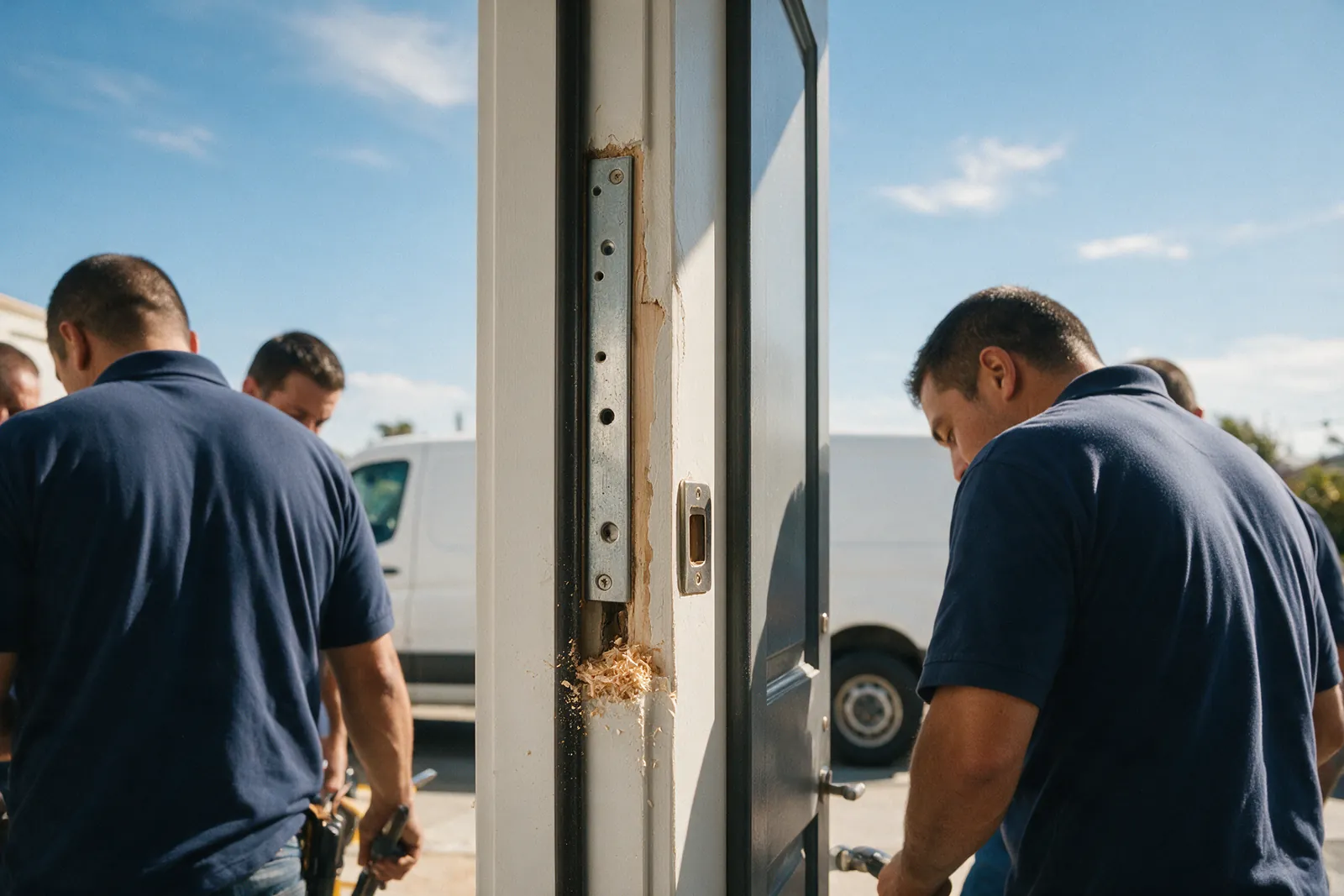
A forced storefront door is a sequence of small decisions made at two in the morning. The glass is usually the first casualty and a glazier is a separate call; what a locksmith does is make the opening lock again before anyone goes home. Post break-in lock repair runs $155 to $409 and covers the parts that took the force: a bent bolt, a torn keeper, a stile pried open at the lock, a strike pulled out of a wood jamb. If the door itself cannot be secured that night, the technician says so and the board-up goes over the opening until it can.
The other decision is the cylinder. If a key was taken from the till or the office, every door it opens is rekeyed that night or the next morning, at $24 to $39 per cylinder. If no key is missing, the cylinder can usually stay. Either way an itemized receipt reaches your email before the van leaves, which is the document the insurer asks for and the one most owners cannot find the next week.
The rear door and the delivery hour
Every restaurant on these two streets has a rear door onto a parking lot or a service alley, and it works harder than the front. Deliveries come through it at six in the morning, staff go out to the dumpster through it all day, and it is propped open with a bucket by four in the afternoon. If staff exit through it, it must open from inside with one motion and no key, which means a panic bar or an exit device at $279 to $745 rather than a deadbolt with a thumbturn. A slide bolt added to that door to stop it drifting open makes it a locked exit, which is the wrong answer to the right question.
The recurring fault is the same one as on the front: the bar depresses, the door swings closed, the latch never reaches the strike, and the door can be pulled from the lot. An outside cylinder on the exit device, so the morning delivery can come in without the front being unlocked, is a small addition to the same visit. A business lockout at opening time, with the key at home with a cook who is not answering, is $125 to $229.
The figures in one place
For a Santa Clara storefront in 2026: service call $89, inside the agreed figure. Storefront door locks $145 to $449. Panic bars and exit devices $279 to $745. Business lockout $125 to $229. Post break-in lock repair $155 to $409. Rekey $24 to $39 per cylinder. Master key systems and access control by custom quote after a walk-through. Evening 8pm to midnight adds $45, overnight midnight to 7am adds $80, and both are stated inside the total on the call.
The maintenance that keeps a shop door working is short and cheap: change the cylinder when the business changes hands, fit a latch guard, keep the rear exit device latching, put the front and back on keys you control, and repin when a key goes missing. Every line on that list costs less than the glazier.
Quick answers
I just took over a restaurant on El Camino. What should change on the doors first?+
The cylinders: front, rear, office and safe, since keys cut for previous operators still open them. A rekey is $24 to $39 per cylinder and a new mortise cylinder is a storefront job at $145 to $449. A latch guard on the front door is worth adding in the same visit.
What does a locksmith do the night a storefront door is forced?+
Makes the opening lock again: a bent bolt, a torn keeper, a pried stile or a pulled strike, at $155 to $409. Glass is a glazier. If a key was taken, the doors it opens are rekeyed the same night, and the itemized receipt is what the insurer will ask for.
Can I put a slide bolt on the kitchen back door so it stops drifting open?+
Not if staff exit through it. That door has to open from inside with one motion and no key, so the answer is an exit device that actually latches, at $279 to $745, with the closer and strike adjusted so it does.
Need it handled rather than read about?
(669) 721-9707More guides